
I have always loved cursive handwriting. From traditional cursive to calligraphy, it is something I have always enjoyed. While I can write neatly in both print and cursive, I definitely write faster in cursive – which was a plus in college as I furiously took notes. As a homeschooler, the question arose a couple of years ago when our oldest was at the age to start cursive handwriting. Should we or shouldn’t we?

The Importance of Learning Cursive Handwriting
The Argument to Teach Cursive
Some parents and educators want cursive handwriting to be included in students’ lessons. Here’s what they said about that:
- How will they ever be able to read historical documents such as the constitution, etc. if they don’t learn to read and write in cursive? -Sara J.
- I don’t think it has been taught in our school for at least the last 10 to 15 years. Cursive writing will become a lost art in America. I think it should still be taught. -Claudia A.
- Yes! It’s part of my children’s 2nd grade homeschool curriculum. They just started doing it, and they are so excited about it. 🙂 -Angela M.
The Argument Not to Teach Cursive
Some say cursive is no longer an essential lesson to teach kids, here’s their reasonings for that:
- No, it’s not relevant anymore. Learn typing instead. -Robert C.
- Honestly, it’s no longer important. Teach them to sign their name; then teach them to convey their thoughts, and be persuasive, via oral and written communications. Why would we want to spend valuable school time, beyond a day or two, teaching someone to sign their name in cursive? Why don’t we spend time teaching calculations via abacus or slide rules? -Gary F.
- I can read Shakespeare, Mark Twain and the Bible among other things all without ever needing cursive. Just don’t get the hype. -Mike E.
The Benefits of Teaching Cursive Handwriting
Most parents think that cursive instruction is for older children; however, you can never start too early. Cursive practice not only enhances cognitive development but also works on fine motor skills. I personally recommend starting with the cursive alphabet (or cursive letters) and practicing both uppercase letters and lower case letters together.
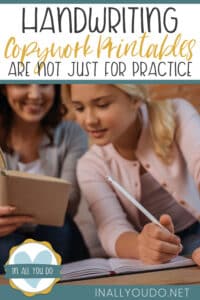
Some of the best ways to get started is a printable worksheet, cursive practice page, or some form of handwriting book. You can give your kids a handwriting task such as writing the grocery list in cursive. Another idea is to have your child write a pen pal in cursive. The processes of cursive writing don’t always come naturally to kids so making it fun can help with that.

Cursive Worksheets and Resources for Kids
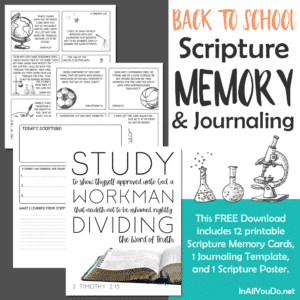
Are you an educator or parent who wants to spend time teaching your kids how to write in cursive? If so, these resources from my shop will make it a lot more easy and FUN to learn cursive. Not to mention, there are also fun resources for middle and high school students!
What do you think?
Do you plan to (or currently do) teach cursive handwriting to your children?



 Annette lived many years as an exhausted wife of 1 and mother of 6. Grab your fuzzy blanket, pour your favorite drink, and browse through our encouraging tips, printables, and curriculum options. Read more about me and the ministry here at In All You Do
This Post Has 8 Comments
My son is 6 years old and we’re doing 1st grade at home. I started teaching him cursive this year, a year earlier than I was taught in school, in the hopes that it would correct his backwards letters. And it has. He loves cursive and it is much neater and easier to read than his print ever was. I remember reading that when we learn something new and continue to practice it, it creates and strengthens neural pathways in our brains. In my non-expert opinion, one can never have too many neural pathways. He will learn how to type, but for right now I prefer that he does most of his school on paper and not in front of a screen.
Oh Tracy, that is WONDERFUL!!! What a testimony! I know it has helped my oldest with his handwriting and letters as well. They say it is good for dyslexic kids, because cursive letters are not as easy to confuse as print letters (b,d). So glad it is helping! And YES…the more neural pathways the better! 😉 Thanks for stopping by!
I taught cursive to first graders using the Abeka curriculum. My students had beautiful cursive! I do think it is important for kids to master print first. I wish the schools would teach cursive consistently. I think it is important to learn both.
I totally agree!!
Without even reading it, I’m gonna say YES! We should teach it! Okay, now that I got that off my chest, I’ll go back and read the post. Promise.
Okay, so my answer is still yes. I think the ones who don’t want it taught are just lazy, or don’t realize all the intrinsic value.
Here from Inspire Me Monday.
I think you’re right, people aren’t aware of the value.
My daughter has been begging me for months to teach her cursive. She’s right now being dismissed from her last day of Kindergarten. So yeah, I’d agree it should still be taught. Lucky for me she found my old handwriting book from when I was in school and has been teaching herself. She’s doing quite well considering. I’m happy she’s taken the initiative on her own because, to be honest, my own handwriting has definitely taken on it’s own flair since I started learning cursive nearly a quarter century ago. Wouldn’t be too fair on her to teach her the way I write.
Good for her learning cursive and taking the initiative! My kids all seemed to grasp their letters better once learning cursive, because there is only one way to write each letter and they can’t be confused with others – like they do in print (b and d, q and p, etc).