

Are you wanting to try some new things and get your family outside this school year? Using some of these nature study activities in your homeschool is a great way to spend some more time outdoors.

“A love of Nature, implanted so early that it will seem to them hereafter to have been born in them, will enrich their lives with pure interests, absorbing pursuits, health, and good humor.” -Charlotte Mason
Charlotte Mason believed that nature study was not just a subject to teach in the classroom but a way of life that should be integrated into daily living. She believed that nature study could foster a sense of wonder and curiosity that can develop a lifelong appreciation and love for nature.
Whether you embrace the Charlotte Mason philosophy in your homeschool or not, there is much to be learned by taking your family out in nature together.
5 Easy Nature Study Activities for Homeschoolers
Incorporating a homeschool nature study into your curriculum is easy and doesn’t require an extensive time commitment. There are lots of great nature study ideas and outdoor learning activities for kids of all ages to participate in.
Take a look at these nature activities and creative ideas that you can naturally weave into your family and homeschool time. They can become and everyday part of your routine, and something to look forward to doing together as a family.
Nature Walks
Going on a nature walk is a simple yet effective way to introduce your children to the natural world. You can take your kids to a local park park or nature preserve, or simply explore your backyard. They will have such a good time being outside in their natural surroundings.
Encourage your children to take a closer look at their surroundings. Teach them to observe the plants, animals, and insects they see. You may want to bring along a field guide or a nature app to identify any unfamiliar species of bugs or plants.
To create a more engaging nature walk provide a scavenger hunt list, have your child collect leaves or flowers, or use a magnifying glass for a different perspective. Children love to pick up treasures as they are out in nature. Point out interesting shaped sticks or rocks.
They can even start a nature collection of beautiful items that are special to them. You can create a small nature table in your home where they can display the things that they have found.

Scavenger Hunts on a Nature Walk
Scavenger hunts can help your children learn about the seasonal changes and weather conditions that can occur each season. Discuss the different things that you can find each season as you take your hunts together.
Summer Scavenger Hunt Bundle – Keep your kids from boredom this summer with 3 different summer themed scavenger hunts to choose from. Take a hunt at the beach, while hiking or in your own neighborhood.
Winter Scavenger Hunts – These fun winter scavenger hunts would go great with a winter nature study theme.
Fall Senses Hunt – Practice using your senses with these fall senses scavenger hunt printables.
Nature Journaling
Nature journaling is a great way for children to record their observations and connect with the natural world. All you need is a notebook and some art supplies. Encourage your children to draw or paint what they observe on their nature walk or in your backyard.
It is also a great addition to language arts in your homeschool . Journal writing prompts help a child stay engaged. For example, you could ask them to draw their favorite tree or write a poem about a bird they saw.
Ask your child to make the journal their brand of creativity so they can form a connection with this activity. Their journals can be customized and themed to their favorite animal or nature item.
Free Nature Journal
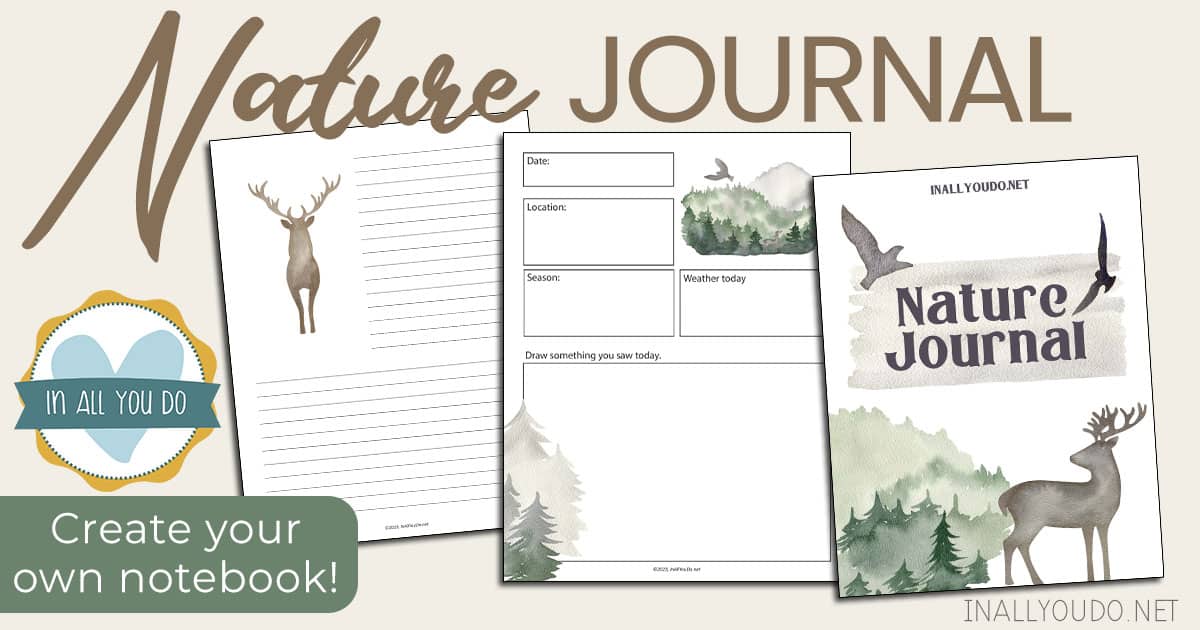
Our free nature journals have a simple and calming design. It has everything that you and your children will need to get started nature journaling. There are 5 pages with everything you need to journal a day trip, or a weekend out in nature.
There is a cover page, a page to record the date, location season, weather and to draw what you say that day. Another page will have you dig deeper by drawing an insect, tree, plant and animal that you saw. The last two pages are to write a journal entry or journal prompt about your day out in nature.
Print as many pages as you would like to create a nice, full book.
Nature Study Focus
Allow your child to focus their journal or study on a particular topic of interest. Topics of interest to explore could be birds, bugs, trees, or flowers. If the focus of choice is on an animal or insect, have your child record his findings on habitat, diet, behavior, and sound or how they move.
Taking a nature study focus approach helps your child to get excited about a specific subject or topic. What are your children fascinated about? Focus on that specific thing and go down the rabbit hole with studying and research.
Nature Topics of Interest:
Life Cycles
Learning about life cycles such as a butterfly life cycle, or frog life cycles can be incorporated into your science lessons as well. Look for the different stages of butterflies and frogs out in nature and record them in your journal.
You can take this a step further by watching a butterfly lay their eggs, searching for baby caterpillars and chrysalises that will be hiding in your yard. If you are lucky you may even see a butterfly emerege.
Search for baby tadpoles in different water sources in your yard and watch them as they develop legs, and later turn into frogs.

Gardening
Whether you plant an outdoor vegetable garden, an indoor herb garden, or a flower garden, your child will benefit from this simple activity. Gardening naturally teaches a child about the life cycle of plants, environmental factors, responsibility, and even math.
To maximize learning, create a garden journal to document the growth of the plants and any observations they make about the soil, weather, or pests.
You can learn about beneficial insects like pollinators and predatory insects. Learn about which native plants you should plant for your area. These will attract the beneficial insects as well as provide protection for native wildlife.
Easily incorporate a science gardening unit study into your nature studies with many resources and free printables.

Nature Photography
If you have older children who may not be interested in drawing or shows interest in using a new medium then nature photography is a great choice. All you need is a camera or smartphone and some natural subjects or living things to photograph. Encourage your children to experiment with different angles and lighting to capture the beauty of nature at the perfect time of day.
You can also create a photography prompt for your children. For example, you could ask them to take a photo of their favorite flower or capture the beauty of a sunset. Nature photography is a fun and creative way for children to learn about the natural world.
Nature photography is a wonderful way to help your children to learn how to observe animals and wildlife in their natural habitat. They will have a great time when you can incorporate it into outdoor education.




 Annette lived many years as an exhausted wife of 1 and mother of 6. Grab your fuzzy blanket, pour your favorite drink, and browse through our encouraging tips, printables, and curriculum options. Read more about me and the ministry here at In All You Do